SPECIAL SESSION #13
Object Detection, Tracking, and Sensor Fusion for Maritime Situational Awareness
ORGANIZED BY
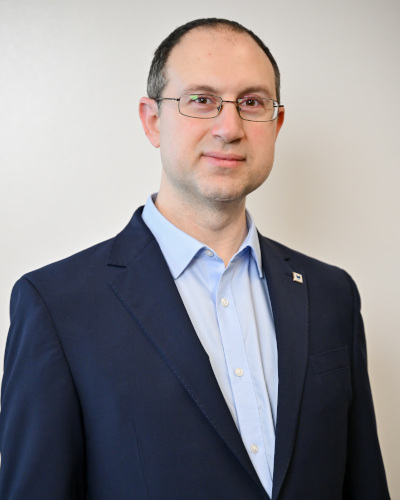 Ioannis Kyriakides
Ioannis Kyriakides
Cyprus Marine and Maritime Institute (CMMI)
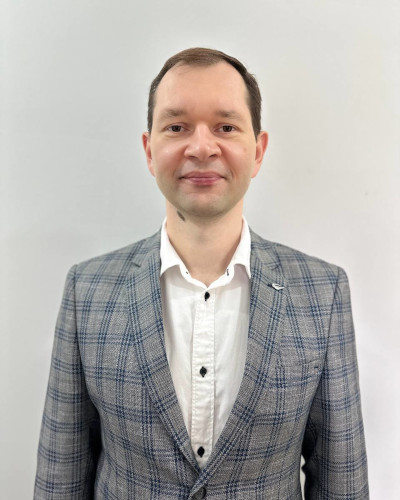 Andrei Starodubov
Andrei Starodubov
Cyprus Marine and Maritime Institute (CMMI)
SPECIAL SESSION DESCRIPTION
Maritime situational awareness relies on robust sensing and processing for the detection, localization, classification, and tracking of objects in challenging sea environments. In many practical scenarios, the objects of interest are non-cooperative, AIS-unavailable, partially observed, low-observable, or only intermittently detectable, so relevant information must be inferred directly from measurements acquired in sea-surface, littoral, port, and underwater settings. This special session invites contributions on methods and systems spanning measurement acquisition, sensing strategy, signal and image processing, estimation, learning, fusion, and data interpretation for maritime object detection and tracking.
The session welcomes both single-sensor and multi-sensor contributions, including multimodal and heterogeneous fusion, across single-object and multi-object scenarios. We are particularly interested in approaches that remain effective under clutter, low visibility, occlusion, reverberation, dynamic sea conditions, and degraded, delayed, or intermittent measurements, as well as in adaptive and information-driven sensing, sensor management, active perception, and motion-aware strategies such as sensor repositioning, platform maneuvering, or path planning. By covering sensing, inference, fusion, and agile operation in a unified setting, the session aims to foster discussion among researchers and practitioners advancing maritime monitoring, surveillance, safety, security, and situational awareness at sea.
TOPICS
We welcome original contributions on topics including, but not limited to:
- Detection, localization, classification, and tracking of maritime objects, including small, non-cooperative, AIS-unavailable, low-observable, or intermittently observed targets;
- Sensing and perception for sea-surface, littoral, port, and underwater environments using visible, infrared/thermal, radar, LiDAR, sonar, passive-acoustic, AIS, GNSS, inertial, and related modalities;
- Single-sensor and multi-sensor approaches, including multimodal and heterogeneous fusion, for maritime situational awareness;
- Single-object and multi-object tracking, track initiation and maintenance, data association, and trajectory inference;
- Signal, image, and spatiotemporal processing under clutter, sea-state variability, low visibility, occlusion, reverberation, and degraded, delayed, intermittent, or missing measurements;
- Model-based, learning-based, and hybrid methods for robust estimation, uncertainty quantification, confidence-aware fusion, and decision support in challenging maritime scenarios;
- Adaptive sensing, sensor management, and information-driven measurement selection;
- Active perception, sensor repositioning, path planning, and motion-aware sensing for mobile maritime systems;
- Distributed and cooperative sensing and tracking with fixed and mobile platforms, including real-time, embedded, and edge implementations;
- Calibration, synchronization, georeferencing, benchmarking, experimental evaluation, and metrological assessment of maritime sensing and tracking systems.
ABOUT THE ORGANIZERS
Dr. Ioannis Kyriakides is Marine Technology Research Director at the Cyprus Marine and Maritime Institute (CMMI). He received his BSc in Electrical Engineering from Texas A&M University and his MSc and PhD from Arizona State University. His research focuses on Bayesian target tracking, sequential Monte Carlo methods, heterogeneous data fusion, and sensing-node configuration, with applications including passive-acoustic tracking of surface vehicles, multi-target tracking with agile sensors, and autonomous path planning for information acquisition. He is a Senior Member of IEEE.
Dr. Andrei Starodubov is Senior Associate Scientist in Signal Processing at the Cyprus Marine and Maritime Institute (CMMI), working within the Maritime Digitalisation Center (MDIGIC). His research focuses on advanced target tracking and estimation in dynamic sea-surface environments, multi-sensor data fusion, deep learning and reinforcement learning based approaches for maritime situational awareness. He holds a Specialist degree in Physics and a PhD in Physics and Mathematics from Saratov State University. His broader background includes signal processing, electromagnetics, and microfabrication technologies.