SPECIAL SESSION #14
Smart Marine Infrastructures – Technologies, Systems, and Applications
ORGANIZED BY
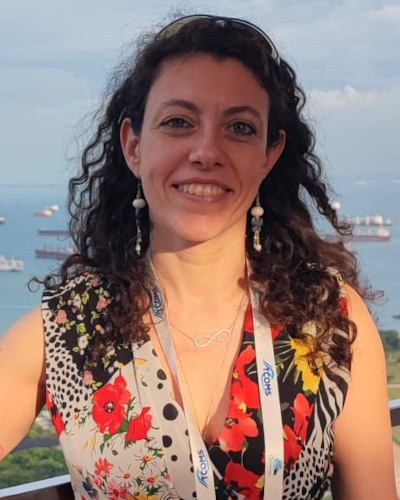 Enrica Zereik
Enrica Zereik
Italian National Research Council
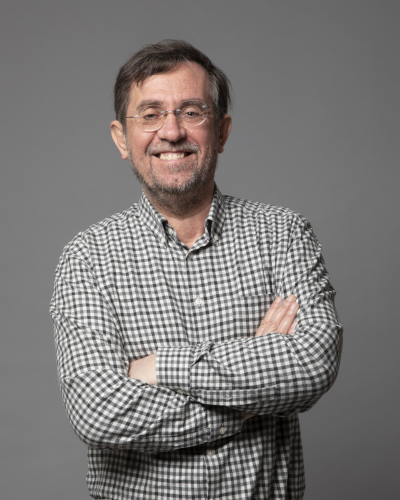 Fabio Bonsignorio
Fabio Bonsignorio
FER, University of Zagreb and Heron Robots
 Francesco Maurelli
Francesco Maurelli
Constructor University, Bremen
SPECIAL SESSION DESCRIPTION
The concurrent great progress in robotics, Internet of Things, Machine Learning and AI has triggered a new industrial revolution, dubbed Industry 4.0 in Germany and Italy, Smart Factory in the US and Digitalization of European Industry at European level. The massive availability of computing power, cheap sensors and smart systems, big data and AI agents has opened tremendous opportunities not only to radically redesign factories and supply chains, but also our cities and their surrounding territories. This has led to the idea of ‘Smart Cities’ and ‘Smart Lands’ (large urban sprawls digitally connected in such a way to create a kind of ‘virtual city’). It is natural to extend the smart city and smart land paradigms to complex marine surface and underwater socio–economic and infrastructure systems like ports, marine farms, large monitoring and surveillance systems and, last but not least, remote tourism facilities, protected areas only accessible by robotic avatars or where avatars are provided to allow the fruition by elders or impaired people.
The expected population growth and likely sea level rise will raise the importance of the sustainable and regenerative exploitation of sea and ocean resources. Robotics and AI are key enabling technologies to materially expand the reach of human action in terms of distance from the coasts, underwater depth, marine weather and latitude. Even if many of these technologies are mature, their actual effective employment in the relevant environment requires significant advancements.
These solutions need research and testing applications, being the second one more complex but also more desirable. Despite that, they indicate a feasible development path. This underwater scenario would enable the exploitation of robotic teams, smart systems and AI in a wide range of applications: from inspection and maintenance of underwater (deep) infrastructures, to the establishment of new infrastructures with a persistent robotic presence, to water column and seabed sampling, resource exploitation and underwater mining, to name but a few. The same robotics, smart systems and AI technologies can be more easily exploited in surface applications, for which some difficulties are relaxed.
Application surface scenarios concern the port operation management and the assessment of port water quality (e.g. measurement and sampling of pollutant spilled in water by ships and other vehicles passing through the port for their operations). In this case, tools such as ledger technologies and blockchain can help in certification of measurements and security of transactions.
TOPICS
Topics of Interest include (but are not limited to):
- Smart ports and autonomous maritime logistics;
- Marine IoT networks and sensor fusion;
- Swarm robotics for monitoring and intervention;
- Distributed computing and edge/cloud architectures at sea;
- Blockchain and secure data sharing in marine systems;
- Digital twins for marine infrastructure management;
- AI-driven decision support and predictive maintenance;
- Cybersecurity and resilience in maritime environments.
The session will foster interdisciplinary dialogue and promote innovative solutions addressing the operational, environmental, and societal challenges of next-generation marine infrastructures. It aims to bridge the gap between theoretical developments and real-world deployment.
ABOUT THE ORGANIZERS
Dr. Enrica Zereik graduated in Computer Engineering at the University of Genova on the 27th October 2004 (bachelor degree) and on 3rd November 2006 (master degree). On 7th April 2010 she discussed her Ph.D. thesis on “Space Robotics Supporting Exploration Missions: Vision, Force Control and Coordination Strategies” at the University of Genova and in 2012 she joined the Italian National Research Council (CNR).
She currently is a Senior Research Scientist at CNR-INM, focusing her research activity on underwater manipulation, computer vision, advanced algorithms for navigation guidance and control, evaluation indices & metrics for the experimental assessment of marine platforms’ performance, coordination and control algorithms for cooperative multi-robot systems, experimental reproducibility. She is CNR Head of the Joint Lab heron@cnr, and she coordinates the BEASTIE project. She serves as Editor for IEEE RA-M. She cooperates in many different national and international projects and she is co-authors of several scientific publications, in relevant international journals and conferences.
Her research interests range within different topics in the context of robotics and control. In the first part of her career, she mainly focused on Space Robotics, working at Thales Alenia Space in Turin during her Ph.D. on an ESA (European Space Agency) project aimed at developing an autonomous robotic crew assistant for astronauts in planetary exploration missions. Many skills and expertise were involved: from advanced manipulation and control, to macro-structure cooperation, robot coordination and artificial vision.
After joining CNR, she focused on marine robotics, dealing with many different aspects: from advanced navigation guidance and control systems and underwater/in-air robust manipulation, to stochastic control techniques, computer vision and perception in unstructured environments, to coordination and control algorithms for cooperative multi-robot systems, and the use of machine learning strategies for autonomous robots.
Recently, she focused on the design of reproducible experiments, and on the definition and employment of indices and metrics for the experimental evaluation of robot performance within marine applications. Reproducibility is a very strong and important topic that will help the real technology transfer from robotic prototypes to industry and applications. This is true especially in a field like marine robotics, where there is the strong need to experimentally verify and repeatably validate the approaches that arise in the literature, to be able to apply them in the relevant environment.
She participated in several European and National research projects, collaborating with several national and international research institutions. She currently is the coordinator of the Italian PRIN (Research Program of National Interest) project BEASTIE (roBotic undErwater Autonomous Social Team for cooperative manipulation and IntelligencE), aiming at realizing a disruptive new concept in underwater manipulation, based on cooperation of many small little robots equipped with grippers but without arms. Recently, she was the PI for CNR of the project HumaBeliefs (Benchmarking Humanoid Belief Space Locomotion Planning, funded within the FSTP-2 Open call of the European H2020 EUROBENCH project), aiming at making humanoid robots keep balance while walking like in humans.
Since 2020 she is the CNR Head of the heron@cnr Joint Lab, an innovative academia-industry collaboration on robotics and AI related research and innovation activities.
She served as Associate Editor for IEEE Robotics and Automation Magazine (since 1st January 2021), and she currently became Editor for IEEE Robotics and Automation Magazine (since 1st January 2025). She recently joined Elsevier Control Engineering Practice as Associate Editor. She is the Progam Chair of the IEEE RAS ERAS (Engineering Reliable Autonomous Systems) 2026 Conference. She served and serves as Associate Editor for the International Conference on Robotics and Automation (ICRA) 2024, 2025 and 2026, and had many other editorial responsibilities (Special Issues on IFAC Annual Reviews in Control, on Frontiers in Robotics and AI, and invited tracks and sessions in many different IFAC and IEEE conferences).
She co-authored about 100 papers in international journals and conferences. In 2017 she was awarded the IEEE Transactions on Control Systems Technology Outstanding Paper Award.
She participated as panelist and invited speaker in many different workshops, tutorials, series of lectures in relevant international events such as ICRA, IROS, ERF, RoboSoft, ShanghAI lectures.
She is currently a member of the IFAC Technical Committee on Marine Systems (TC 7.2), IEEE Member and Co-Chair of the IEEE Technical Committee for Performance Evaluation & Benchmarking of Robotic and Automation Systems (TC PEBRAS).
Prof. Fabio Bonsignorio is ERA Chair in AI for Robotics at FER, University of Zagreb, Croatia. He is Founder and CEO of Heron Robots (advanced robotics solutions), see www.heronrobots.com. He has been visiting professor at the Biorobotic Institute of the Scuola Superiore Sant'Anna in Pisa from 2014 to 2019. He has been a professor in the Department of System Engineering and Automation at the University Carlos III of Madrid until 2014. In 2009 he got the Santander Chair of Excellence in Robotics at the same university. He has been visiting professor at the University of Basilicata in 2024. He has been working for some 20 years in the high-tech industry before joining the research community. He coordinates the ShanghAI Lectures (www.shanghailectures.org), initiated by famous University of Zurich Prof.em. Rolf Pfeifer in 2009, since 2013. He initiated the AIFORS Colloquia series (aifors-colloquium-2024/home) in 2024. He is developing radical new approaches to design novel deeply biomimicking robots addressing foundational issues in Physical AI. He is a pioneer and has introduced the topic of Reproducibility of results in Robotics and AI. He is a pioneer in the application of the blockchain to robotics and IA (smart cities, smart land, smart logistics, circular economy…). He coordinates the Topic Group of euRobotics about Experiment Replication, Benchmarking, Challenges and Competitions. He is co-chair of the IEEE Robotics & Automation Society (RAS) Technical Commitee, TC-PEBRAS (PErformance and Benchmarking of Robotics and Autonomous Systems). He is a Distinguished Lecturer for IEEE Robotics and Automation Society. He is a Senior Member of IEEE and member of the Order of the Engineers, Section A, of Genoa, Italy. He coordinated the task force robotics, in the G2net, an EU network studying the application of Machine Learning and Deep Learning to Gravitational wave research, Geophysics and Robotics. He will take care of Physical AI issues and Robotics and Automation applications in the new Cost Action FuSe (CA24101 – Testing Fundamental Physics with Seismology). He will be General Chair of the 2 nd IEEE RAS Intl. Conf. on Engineering Reliable Autonomous Systems ERAS 2026 (2026.ieee-eras.org) and of the 23 rd International Conference on Advanced Robotics in 2027. He has given invited seminars and talks in many places: MIT Media Lab, Max Planck Institute, Imperial College, Politecnico di Milano in Shenzhen, London, Madrid, Warsaw, Sankt Petersburg, Seoul, Rio Grande do Sul and elsewhere.
Dr. Francesco Maurelli is a Professor in Marine Systems and Robotics at Constructor University - formerly Jacobs University Bremen (Germany, EU), where he also serves as Program Chair for the Robotics and Intelligent Systems Program. He has obtained his PhD at the Oceans Systems Lab, Heriot-Watt University (Edinburgh, Scotland) with a thesis on intelligent localisation of Autonomous Underwater Vehicles. He has been Scientific Manager at Technical University of Munich (Germany, EU) where he led European-wide initiatives to support moving robotics technology from the lab to the market. After a research stay at Massachusetts Institute of Technology (Cambridge, MA, USA), as a Marie Curie Fellow, he has accepted a faculty position in Constructor University. Dr. Maurelli's research interests are focused on persistent autonomy for marine robotics, perception, autonomous navigation, intelligent decision making, sensor data processing and fault management.
He has a strong interest for the United Nations. Representative at the UN for youth organisations, co-convenor of the ECOSOC Youth Forum, active participants in several UN SPI meetings and Oceans conferences.
Dr. Maurelli is an Executive Committee member of the Global Young Academy, Co-Chair of the Technical Committee in Marine Robotics and Co-Chairs of the Young Professional Committee in the IEEE Robotics and Automation Society and member of the Administrative Committee of the IEEE Oceanic Engineering Society.