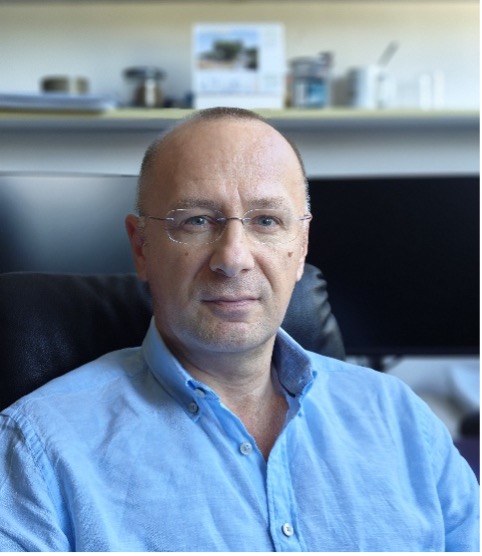
 Vlado Cuculić
KEYNOTE LECTURE
From Renaissance Trade to Modern Marine Science: The Adriatic Shipwreck as an Interdisciplinary Natural Laboratory
Vlado Cuculić
Ruđer Bošković Institute, Division for Marine and Environmental Research, Croatia
ABSTRACT
Founded in 1919, the International Commission for the Scientific Exploration of the Mediterranean Sea (CIESM) was established to promote scientific cooperation among Mediterranean countries and to advance understanding of one of the world’s most complex marine regions. Since its inception, CIESM has embraced an interdisciplinary approach, bringing together oceanographers, chemists, biologists, geologists, archaeologists, engineers, and environmental scientists to address challenges that transcend traditional scientific boundaries. This collaborative philosophy remains essential for understanding the interactions between natural processes, human activities, and cultural heritage in the Mediterranean Sea.
A remarkable example of such interdisciplinary research is the Gnalić shipwreck, located in the Croatian Middle Adriatic near Biograd na Moru. The merchant ship Gagliana Grossa sank in 1583 at a depth of 25 m, carrying valuable cargo from Venice to Istanbul, including substantial quantities (500 - 1000 kg) of mercury and mercury-bearing materials. More than four centuries later, archaeological investigations of the wreck began in 1967, revealing a unique natural laboratory where underwater archaeology, marine chemistry, environmental monitoring, analytical science, and marine technology converge. For a decade, Croatian scientists from the Ruđer Bošković Institute have been investigating mercury contamination associated with the Gnalić shipwreck. Recent investigations have revealed elevated mercury concentrations in seawater, sediments, and marine organisms surrounding the site, demonstrating that historical contamination can remain environmentally relevant for centuries. The site offers a rare opportunity to study the long-term fate of mercury in a semi-enclosed coastal ecosystem, including its transport, transformation, bioaccumulation, and potential ecological impacts. At the same time, ongoing archaeological excavations raise important questions regarding contaminant remobilization and environmental risk assessment.
This lecture will present recent findings from the Gnalić shipwreck and highlight how interdisciplinary collaboration between marine scientists, archaeologists, and engineers is advancing our understanding of both underwater cultural heritage and marine environmental processes. The lecture will also introduce CIESM as a unique and leading Mediterranean scientific organization that, for more than a century, has promoted interdisciplinary research and international cooperation across diverse fields of marine science, providing a framework for addressing complex environmental challenges.
SPEAKER BIOGRAPHY
Dr. Vlado Cuculić is a Senior Research Associate at the Ruđer Bošković Institute, Division for Marine and Environmental Research (Zagreb, Croatia). He is a marine and environmental chemist whose research focuses on the biogeochemistry of trace elements in coastal and marine ecosystems. His work investigates the distribution, speciation, and cycling of trace metals in seawater, sediments, and marine biota, including metal speciation in marine systems and mercury analysis and speciation. His research also addresses the interactions of trace metals with organic matter and emerging contaminants such as microplastics. He has extensive experience in environmental monitoring and the application of advanced analytical techniques for the study of complex marine systems. As principal investigator of several projects and a participant in numerous international research initiatives, he has contributed significantly to advancing knowledge of biogeochemical processes in coastal environments. Dr. Cuculić currently serves as Chair of the Marine Biogeochemistry Committee of the International Commission for the Scientific Exploration of the Mediterranean Sea (CIESM) and is a member of its Science Council. He is actively involved in European research networks, scientific evaluation panels, and interdisciplinary collaborations addressing marine pollution and ecosystem health.